
Headers
string
string
string
string
Event name for this delivery, for example
alert.created, alert.updated, deflection.created, or deflection.updated.Body
Alert events (alert.*) and deflection events (deflection.*) use different JSON bodies. Use the tabs below for field definitions; the example on the right switches between Alert and Deflection.
- Alert
- Deflection
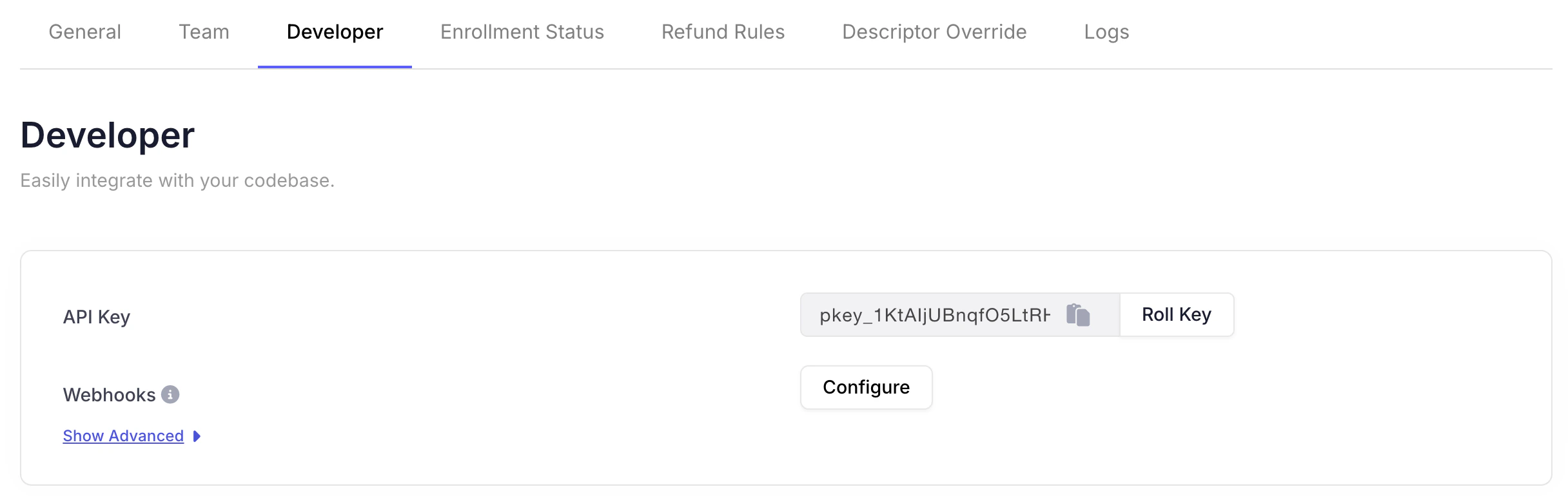
First set up your webhook URL in the Chargeblast dashboard in the settings tab.
X-Event-Type fires.
The
externalOrder field is not available in the alert.created event.
Please use the alert.updated event if you require this field.Authentication
To authenticate the integrity of incoming webhooks, a header is passed into the post request to your endpoint under the header namesvix-signature. The value in this header is an HMAC-SHA256 encoded string using the payload of the request with the webhook secret as key.
In order to authenticate the request, you perform a HMAC-SHA256 encoding using a concat of webhook request body, svix_timestamp and svix_id and your webhook secret (whsec_xxxxxxxxxxxx) and ensure these strings match. Then input string to SHA256 HMAC will look like:
signedContent = "${svix_id}.${svix_timestamp}.${body}"
This is a common method for ensuring that the webhook messages you receive in your server are from a trusted source and haven’t been tampered with.
bm9ldHUjKzFob2VudXRob2VodWUzMjRvdWVvdW9ldQo=.
Types
Chargeblast emits severalX-Event-Type values, including alert events (alert.created, alert.updated, alert.refunded, alert.matched, alert.will_expire, alert.within_refund_rules) and deflection events (deflection.created, deflection.updated). The guide below documents when each event fires and which alert or deflection types apply:
Webhook event types
Related
- Webhook event types — Full event-type reference (alerts and deflections)
- Alert Types — Full list of alert networks and subprovider values
- Reason Codes — Codes used when actioning alerts